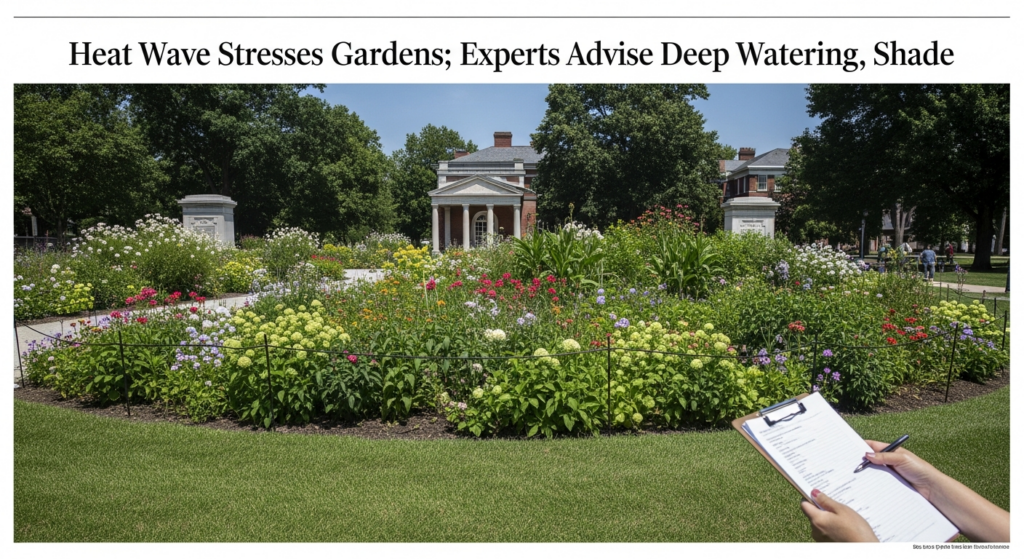
The current heat wave has prompted a surge in demand for gardening advice, with home-and-garden resources emphasizing critical strategies for plant survival. Experts recommend a multi-pronged approach focusing on watering timing, deep watering, shade provision, mulching, and the prioritization of stressed plants.
Watering is paramount during periods of intense heat. Sources suggest that the most effective time to water is in the early morning, before the sun’s intensity causes rapid evaporation. This allows plants to absorb moisture deeply before the heat of the day sets in. Deep watering, rather than frequent shallow sprinklings, encourages root growth deeper into the soil, making plants more resilient to drought and heat stress. Applying water directly to the soil at the base of plants is more efficient than overhead watering, which can lead to water loss through evaporation and potentially promote fungal diseases.
Providing shade is another crucial element in protecting gardens. For vulnerable plants, temporary shade structures can be erected using shade cloth, netting, or even strategically placed umbrellas. Natural shade from trees or taller plants can also offer significant relief. Gardeners are advised to observe which areas of their garden receive the most intense sun and to consider relocating smaller, more delicate plants to cooler, shadier spots if possible.
Mulching plays a vital role in retaining soil moisture and regulating soil temperature. A layer of organic mulch, such as wood chips, straw, or compost, applied around the base of plants can significantly reduce water evaporation from the soil surface and keep roots cooler. It also helps suppress weeds, which compete with garden plants for water and nutrients.
Prioritizing stressed plants is also a key recommendation. Gardeners should identify plants that are showing signs of distress, such as wilting or yellowing leaves, and focus their watering and care efforts on these specimens. Severely stressed plants may require temporary relief from direct sun or additional watering, even if other plants in the garden appear to be coping better.
These general guidelines offer a framework for gardeners navigating the current heat. Localized information regarding specific water restrictions, the availability of extension office advice, or regional plant zone context could further enhance these recommendations for residents in the Plymouth area.
Why it matters in Plymouth:
As Plymouth experiences prolonged periods of high temperatures, the health of residential and community gardens is directly impacted. Residents rely on their gardens for aesthetic appeal, food production, and recreational value. Implementing these deep watering and shade strategies can help preserve plant life, reduce water consumption by promoting efficient watering, and maintain the green spaces that contribute to the character of neighborhoods like Old Village and Elm Heights. The Plymouth-Canton Community Schools, a major local employer, also manages grounds that benefit from such horticultural practices during summer months.