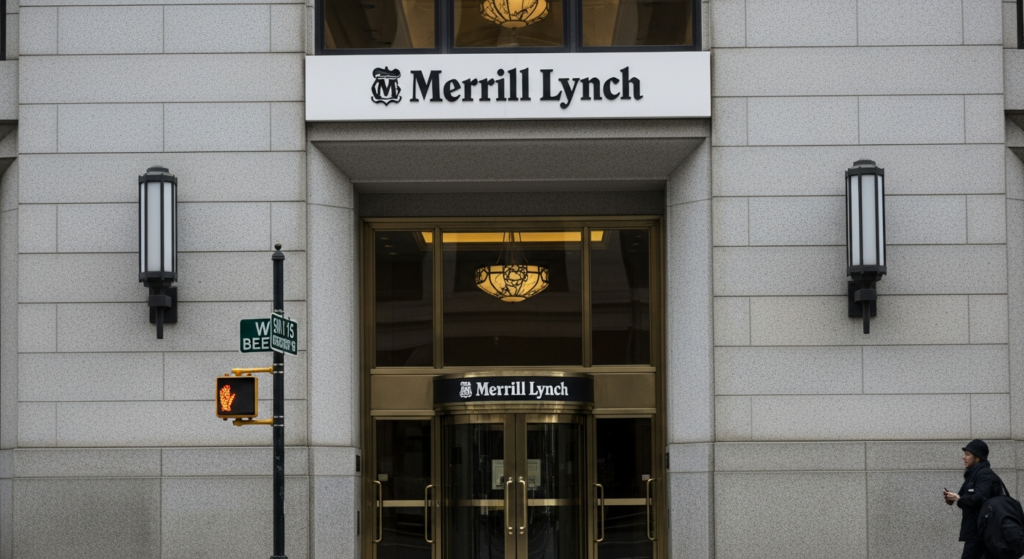
Merrill Lynch has agreed to pay $7.5 million to the Securities and Exchange Commission (SEC) to settle allegations that it failed to properly file all required suspicious activity reports (SARs). The administrative action, filed Monday, states that the brokerage unit did not investigate all potentially illicit transactions between April 2020 and September 2024 due to how its corporate parent flagged certain activities for additional review.
According to the SEC, Merrill Lynch relied on Bank of America’s risk-scoring system, which grouped potentially suspicious events into categories to determine when SARs were necessary. This system led to Merrill failing to investigate certain groups of events that, despite having low-risk scores, were internally identified as potentially reportable. Transactions flagged for being suspiciously large, linked to criminal activity, or involving high-risk locations went unreported, the SEC stated.
The SEC’s findings indicate that Merrill’s transaction monitoring system excluded some lower-risk events from review, even when internal analyses suggested these events warranted SAR filings. The brokerage firm neither admitted nor denied the SEC’s findings as part of the settlement.
The failure to file SARs can have significant implications for regulatory oversight and the prevention of financial crimes. Suspicious activity reports are a critical tool for law enforcement and regulatory bodies to detect and combat money laundering, fraud, and other illicit financial activities. By not adequately investigating and reporting these transactions, Merrill Lynch may have inadvertently created blind spots that could be exploited by bad actors.
The SEC’s action underscores the importance of robust compliance systems within large financial institutions. The agency has increasingly focused on ensuring that broker-dealers have effective programs in place to monitor transactions and identify suspicious behavior. This settlement serves as a reminder that even sophisticated risk-scoring systems must be rigorously applied and that internal analyses indicating reportable events cannot be disregarded based on broad risk categorizations.
Bank of America, the parent company of Merrill Lynch, operates a significant presence within the financial services sector. While the SEC action specifically targets Merrill Lynch’s reporting practices, the reliance on a corporate parent’s risk-scoring system highlights the interconnectedness of compliance functions within large banking conglomerates. The settlement’s focus on the period between April 2020 and September 2024 suggests a period of heightened scrutiny by regulators on the effectiveness of these systems during a time of significant market volatility and evolving financial crime tactics.
The $7.5 million penalty, while substantial, is intended to reflect the seriousness of the compliance failures. The SEC’s administrative action process allows for settlements without admission of guilt, providing a path for firms to resolve allegations while continuing their operations. However, the findings themselves serve as a public record of the alleged deficiencies in Merrill Lynch’s compliance program.
This case also brings attention to the complexities of modern financial transaction monitoring. In an era of high-frequency trading, global capital flows, and sophisticated anonymization techniques, financial institutions face immense challenges in distinguishing legitimate transactions from illicit ones. The SEC’s enforcement actions aim to ensure that firms invest adequately in technology, personnel, and processes to meet their regulatory obligations.
Why it matters in Plymouth:
While the SEC action against Merrill Lynch is a federal matter, the underlying principles of regulatory compliance and financial integrity are relevant to all institutions operating within the financial sector. For Plymouth residents who may utilize Merrill Lynch or other Bank of America services, this settlement highlights the importance of regulatory oversight in safeguarding financial markets. Institutions like Henry Ford Medical Center — Plymouth and Plymouth-Canton Community Schools, which manage significant financial resources and endowments, rely on the stability and integrity of the broader financial system. Failures in compliance by major financial players can have ripple effects, underscoring the need for rigorous oversight to protect investors and maintain confidence in the financial industry that supports local employers and public services.