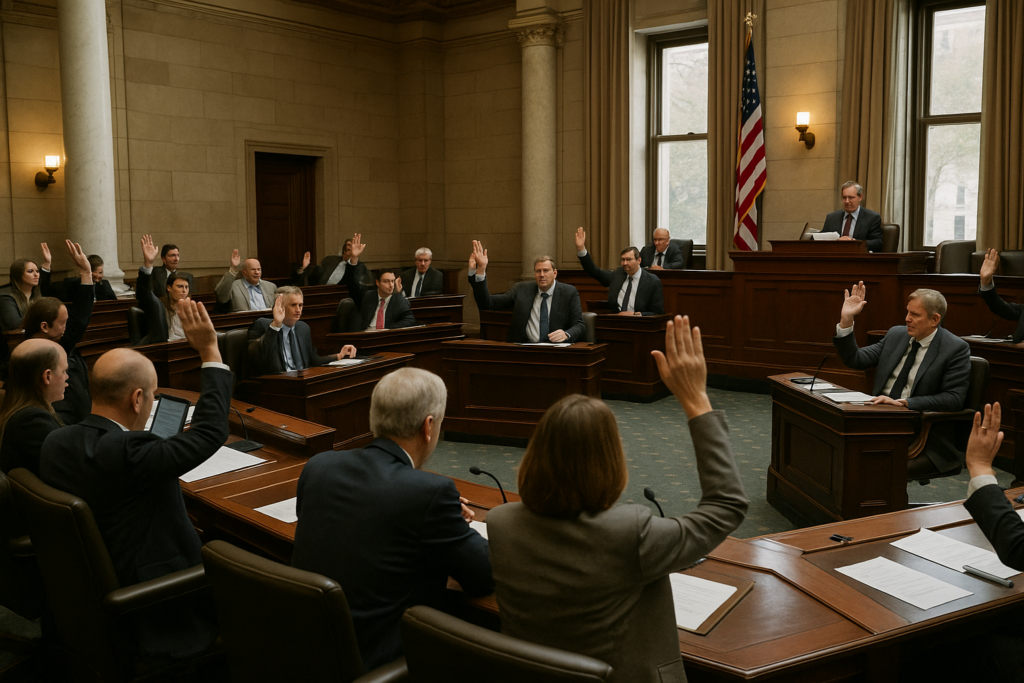
The Senate approved a resolution aimed at limiting U.S. military action against Iran, passing the measure by a narrow 50-48 vote. This decision follows similar action taken by the House, reflecting a growing concern among lawmakers regarding the extent of executive power in military engagements. Four Republican senators joined the majority of Democrats in supporting the resolution, indicating a rare moment of bipartisan agreement on foreign policy issues.
The resolution mandates the withdrawal of U.S. forces from hostilities involving Iran unless Congress explicitly authorizes military action. This legislative move is seen as a direct challenge to the current administration, which has disputed the practical implications of the vote, raising questions about its enforceability in court.
The debate over war powers has significant implications for military families and veterans, particularly in communities like Plymouth, where many have ties to the armed forces. The resolution’s passage underscores a critical aspect of U.S. governance: the balance of power between Congress and the executive branch in matters of war and peace.
As discussions continue, the focus will likely shift to how this resolution will be implemented and whether it will lead to a broader reassessment of U.S. foreign policy in the Middle East. The outcome may influence not only military strategy but also the political landscape as the nation moves closer to the next election cycle.
In Plymouth, the impact of such decisions resonates deeply, especially among those connected to military service. Local organizations and advocacy groups may use this moment to engage with constituents about the importance of congressional oversight in military affairs, ensuring that the voices of veterans and their families are heard in the ongoing debate.