

News Summary
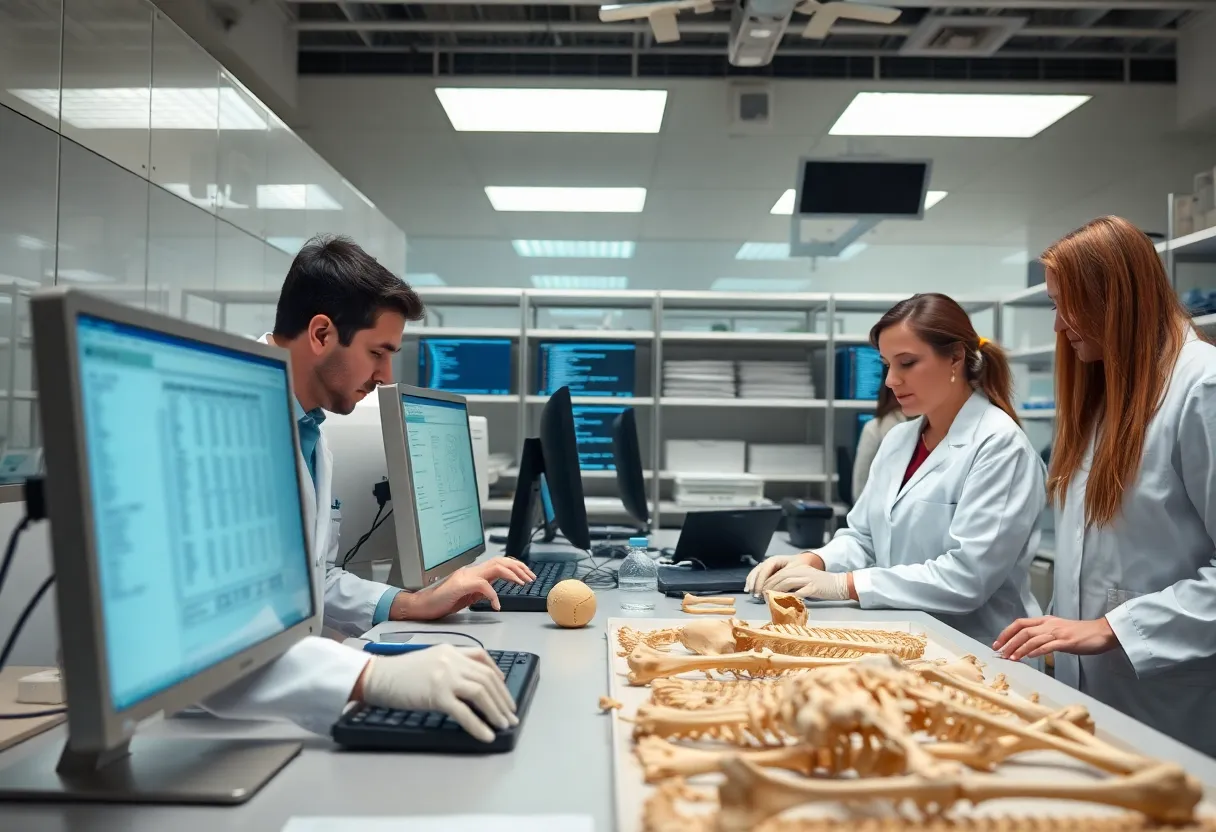
Michigan State University has launched the groundbreaking MOSAIC project, aimed at revolutionizing the identification of human remains. Funded by a $2.1 million grant, this initiative will develop a sophisticated software platform that utilizes a single algorithm to generate biological profiles from skeletal remains. It seeks to create a centralized database to streamline the identification process globally, combining data from various countries to ensure accuracy. The project will also provide practical training opportunities for graduate students while offering a new paradigm in forensic anthropology.
MOSAIК Software Project Kicks Off at Michigan State University
Located in the heart of East Lansing, Michigan, Michigan State University is taking a giant leap into the future with their latest project aimed at revolutionizing the way we identify human remains. This innovative initiative, named MOSAIC—which stands for Methods of Sex, Stature Affinity and Age—is ready to enhance the identification process that has long been considered slow, outdated, and disorganized.
Meet MOSAIC: A Game Changer in Forensic Anthropology
Funded by a substantial $2.1 million grant from the National Institute of Justice, the MOSAIC project is being spearheaded by a talented team led by an associate professor of anthropology at MSU’s College of Social Science. The main aim of MOSAIC is to create cutting-edge software that generates a comprehensive biological profile of unidentified human remains.
The twist? MOSAIC will utilize a single algorithm to assess data from skeletal remains, which will allow researchers to pinpoint essential components for crafting the biological profile. This ambitious endeavor is touted as being the first of its kind in the arena of forensic anthropology.
A Shift Towards Integration
Currently, existing software solutions for identifying human remains lack connectivity to a shared database, which can be a huge bottleneck in the identification process. However, MOSAIC intends to change that. By creating a centralized database of unidentified human remains, the project aims to streamline the identification process not just in the U.S. but around the globe.
The research team doesn’t plan to limit their data collection; they’re aiming high! Their goal is to gather data from remains collections across various countries, including the United States, Mexico, Japan, and South Africa. This diverse data collection effort will help account for global human variation in physical characteristics, making the biological profiles they create even more accurate and useful.
Global Impact with Local Team
This exciting project sprang from discussions between key researchers, emphasizing collaborative work. Co-principal investigators join forces to develop MOSAIC, indicating that the project is grounded in teamwork and shared expertise. Some important figures involved are highly qualified experts in the field who bring valuable insights and data to the table.
In addition to enhancing the software, the project aims to provide real-world experience for graduate students at MSU by hiring a postdoctoral researcher and a graduate student to help with data collection and software development. A hands-on approach is definitely part of their game plan, and it’s great news for students eager to learn!
Innovation on the Horizon
MOSAIC is not just another project; it represents a major paradigm shift in forensic anthropology, and its impact is predicted to last for decades. The innovative approach that MOSAIC embodies might soon become the standard practice in the identification of human remains, drastically changing the landscape of forensic science.
As the project unfolds, it’s clear that MOSAIC presents an incredible opportunity for advancements in the realm of forensics. With a holistic approach to creating biological profiles by incorporating multiple data points simultaneously, the software envisages a future where identifying human remains can be as efficient and accurate as possible.
In conclusion, the MOSAIC project at Michigan State University is set to provide exciting advancements that will not only enhance the field of forensic anthropology but also make a lasting impact in the realm of identifying human remains for years to come. East Lansing is on the cutting edge of forensic science, and the world will be watching eagerly!
Deeper Dive: News & Info About This Topic
HERE Resources
Additional Resources
- WILX: MSU Creating First-of-Its-Kind Database to Identify Human Remains
- Wikipedia: Forensic Anthropology
- Newswise: MSU to Create First-of-Its-Kind Database for Analyzing Human Remains
- Google Search: Forensic Anthropology Advancements
- WILX: Name of Person of Interest in East Lansing Double Homicide Released
- Google Scholar: Forensic Anthropology
- Encyclopedia Britannica: Forensic Anthropology
- Google News: MOSAIC Forensic Anthropology